
Most façade systems don’t fail in the field. Issues tend to show up at the edges.
Where materials meet and details change, water has more opportunities to get in. These transition points require careful coordination, and over time, they often determine how well the façade performs.
Brake metal flashing helps manage these areas.
This article looks at where façade failures typically start and how brake metal flashing supports consistent drainage at transitions. It also covers what to watch for in fabrication, including how approaches used by Americlad help keep details consistent across the façade.
Where do façade failures actually originate?
Façade failures are rarely caused by large, open wall areas. They typically develop at interfaces, where different systems meet and where conditions become more complex.
The most common trouble spots include:
- Head, sill, and jamb conditions at openings
- Roof-to-wall and parapet transitions
- Panel terminations and horizontal breaks
- Material transitions within rainscreen assemblies
The issue is not the material itself, but the connection between systems.
When those connections are not aligned, the drainage path is interrupted. Water no longer follows a controlled route and can move into areas that are harder to manage. Field adjustments can add to this by introducing small variations that affect how each condition performs.
Over time, this leads to water bypassing intended exit points, moisture collecting within the assembly, and increased maintenance to address the impact.
How should brake metal flashing manage water at transitions?
Brake metal flashing works as part of a continuous water management approach. At transitions, it carries the drainage path forward and keeps water moving in the right direction.
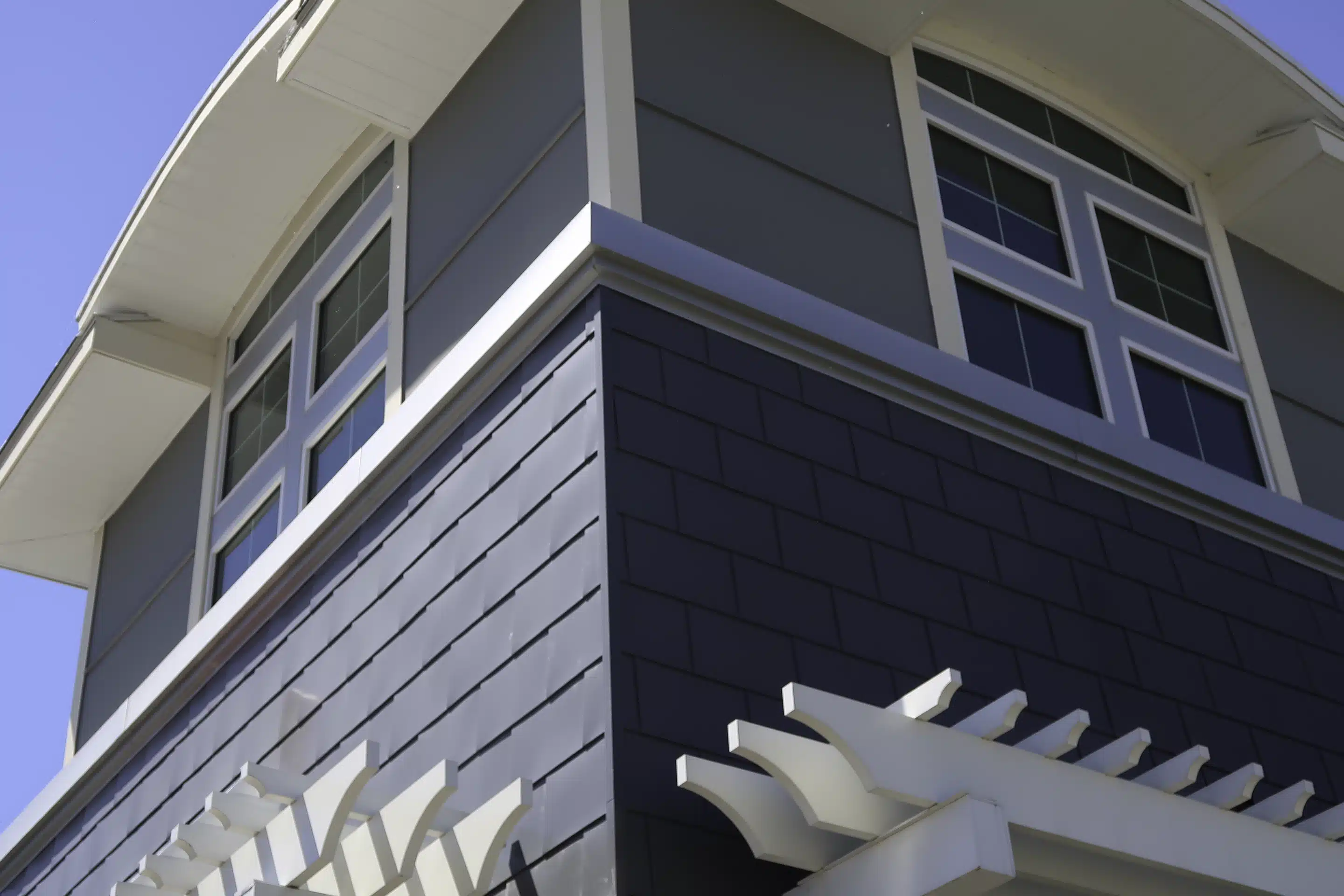
This comes down to how well it connects conditions across the façade. Flashings at openings, drip edges, and transition pieces work together to guide water through these areas and keep it moving out of the system.
Performance depends on a few things being right:
- Geometry that encourages water to move outward
- Alignment with surrounding components
- Consistency from one condition to the next
When those are off, water does not follow a clear path.
For that to work, brake metal flashing has to be formed to match the actual conditions on the building. Pieces that fit cleanly help maintain alignment and keep water moving as intended.
What separates effective flashing fabrication from failure-prone details?
The difference comes down to execution. Brake metal flashing can be designed correctly, but its performance depends on how consistent it is from piece to piece once it is fabricated.
Issues tend to come from:
- Dimensional inconsistencies across runs
- Misalignment at transitions
- Too much reliance on field adjustments to make pieces fit
These small variations add up. When flashing does not align the same way at each condition, the drainage path becomes less predictable.
Stronger fabrication keeps those variables under control. Precision forming helps hold tight tolerances, repeatability keeps conditions consistent across the façade, and clean integration allows flashing to fit with adjoining systems as intended.
The result is a more stable installation. Alignment at transitions is easier to maintain, field adjustments are reduced, and water moves through the system in a more controlled way.
Partner With Americlad
Brake metal flashing performance comes down to what happens at transitions. This is where alignment matters most and where small inconsistencies can affect how the system performs.
Most issues are not caused by the design itself. They come from gaps between systems during fabrication and installation. When components vary or do not align, those differences show up at the most critical points.
Consistent fabrication helps limit that. When parts are formed to match project conditions and remain uniform across the façade, transitions are easier to execute and require fewer field corrections.
What does that level of consistency look like? Explore Americlad’s fabricated brake metal capabilities: Americlad fabricated brake metal
Frequently Asked Questions
Where do most façade water failures actually occur?
Most failures occur at transitions, not in open wall areas. Openings, parapets, terminations, and material changes are where systems meet and where the drainage path is most likely to break down.
What role does brake metal flashing play in maintaining drainage continuity?
Brake metal flashing helps carry the drainage path across those transitions. It directs water through joints and edges so it can exit the system instead of moving behind it.
Why do flashing details fail even when properly designed?
Most failures come from inconsistencies during fabrication or installation. Small differences in fit or alignment can interrupt the drainage path and affect how water moves through the façade.