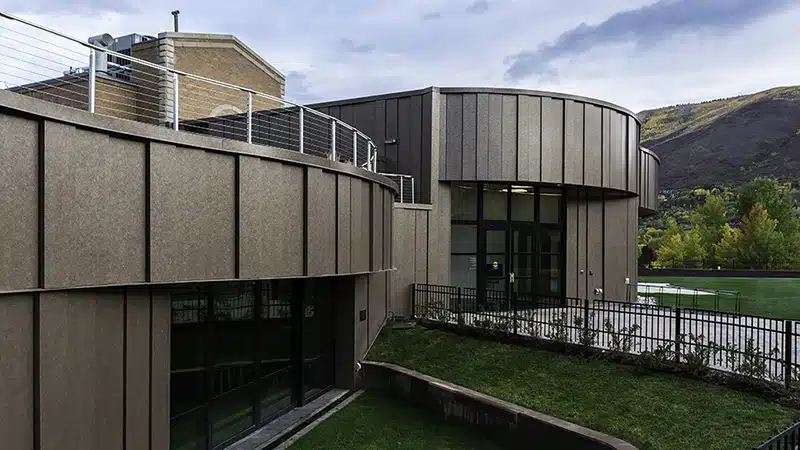
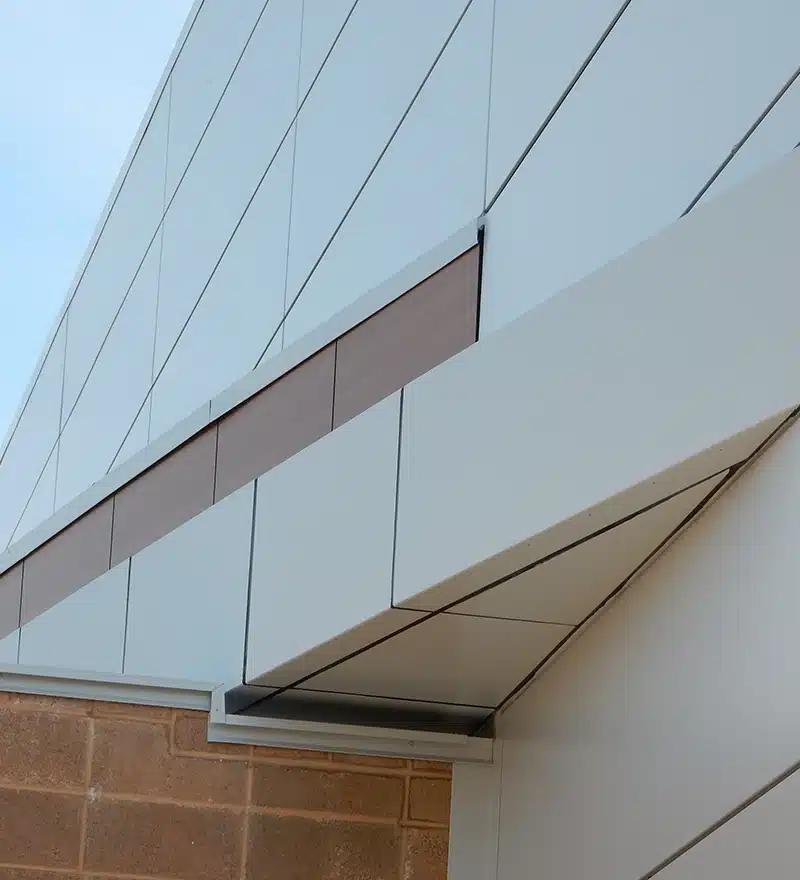
Curves, angled planes, and multi-plane transitions are now common in commercial façade design. These features look good, but they also make panel layout, joints, and transitions harder to plan.
Choosing the right panelized metal wall systems helps address these challenges early. With the right system approach and metal cladding fabrication, commercial façades are easier to design and build.
This article explains how panelized metal wall systems work with nonstandard geometry and what to consider when planning curved and irregular façades.
What makes a façade “complex” from a panel system perspective?
A façade becomes complex when its shape affects how panels line up, connect, and transition from one surface to another. These conditions often require more planning than flat, repeating walls. Common conditions include:
- Curves and radius areas
- Segmented or faceted surfaces
- Areas where multiple wall planes meet
- Angled returns and offsets
- Irregular layouts that do not repeat
Because of this, panelized metal wall systems need more upfront planning. Panel layouts matter more, joints need to be placed with care, and intersections take extra coordination.
How do panelized metal wall systems adapt to curved and irregular geometry?
Different façade shapes call for different panel behaviors. Panelized metal wall systems are not one-size-fits-all, and the way a system handles geometry comes down to a few practical planning decisions. Those decisions show up in the following areas:
- Breaking curves into smaller panels
Curved surfaces are typically formed using smaller, flat panels that step along the curve. This approach keeps panels workable while still following the intended shape.
- Keeping joint spacing consistent
As walls curve or change direction, consistent joint spacing helps maintain alignment and keeps the layout visually organized.
- Handling plane changes and transitions
Where wall planes shift, systems must accommodate corners, returns, and offsets. Planning these transitions early helps panels meet cleanly.
- Adjusting panel size to fit the shape
Tighter or irregular areas often call for smaller or varied panel sizes, while flatter sections of the façade may support larger panels.
- Mapping panels with intention
Clear panel mapping controls where seams, joints, and edges land, which is especially important on non-repeating surfaces.
- Planning intersections early
Curves and plane changes increase the number of intersections. Addressing these areas early helps reduce detailing challenges later in the process.
How does Americlad help teams execute complex geometry successfully?
Complex geometry usually breaks down when details are left too late. Getting it right means thinking through panel layout, joints, and fabrication early so the design does not fight the build. Americlad helps teams work through those decisions before construction starts.
- Getting involved early
Early input helps sort out which parts of a façade may need different panelized metal wall systems. This is especially helpful around curves, plane changes, and irregular areas where layout decisions carry more weight.
- Helping work through joint layout
Joint locations are planned with alignment and transitions in mind. This helps panels meet cleanly at curves, intersections, and terminations instead of being adjusted later in the field.
- Planning around fabrication realities
Panel layouts are reviewed with fabrication in mind so panels can be formed and built efficiently. This approach helps limit custom one-off panels and keeps tolerances under control.
- Reducing field adjustments
When panel mapping, joint spacing, and transitions are worked through ahead of time, installers spend less time making changes on site. This keeps installation moving and reduces rework.
- Thinking about long-term performance
Extra attention is given to intersections and transitions, where most long-term issues tend to appear. Careful detailing in these areas helps the façade hold up over time.
Build With Confidence
Curved and multi-plane façades take more than a panel choice. They call for early thinking around panel layout, joint placement, and fabrication planning.
Americlad works with project teams early to sort through those decisions before geometry creates problems in the field. That upfront support helps keep details clear, installation efficient, and the finished façade aligned with the design intent.
Early planning sets the direction for the entire façade, and those early decisions begin with the right system.
Frequently Asked Questions
Which panelized metal wall systems work best for curved façades?
Systems that break curves into smaller, flat panels tend to work best. This approach helps panels follow the radius while keeping joint spacing consistent.
What should architects coordinate early on nonstandard façades?
Panel layout, joint placement, and transitions should be talked through early in the design process. These decisions affect how panels align, how details are built, and how smoothly installation goes.
Why does fabrication planning matter more on irregular geometry?
Irregular shapes lead to more custom panel conditions. Planning for fabrication early helps control tolerances and reduce changes during installation.