
Architects and contractors can improve commercial building efficiency by controlling heat movement through the exterior wall assembly. Limiting air leakage and thermal bridging helps maintain consistent indoor conditions, while effective moisture and solar heat management further support envelope performance.
High-performance metal cladding can support this strategy while meeting the durability and design requirements of commercial projects. Keep reading to learn how project teams can manage solar heat gain and support long-term building performance with Americlad metal cladding and fabrication solutions.
Table of Contents
- How Does High-Performing Metal Cladding Exterior Strengthen the Building Envelope?
- How Does The Right Metal Cladding Exterior Help Manage Solar Heat Gain?
- How Does Americlad’s Metal Cladding Exterior Improve Long-Term Building Performance?
- Design a High-Performance Building Exterior With Americlad
- Frequently Asked Questions
How Does High-Performing Metal Cladding Exterior Strengthen the Building Envelope?
A well-designed wall assembly results in greater control over heat flow across the façade.
- Continuous insulation maintains a more consistent thermal layer around the building, reducing pathways for heat to move through the exterior wall.
- Thermally efficient attachment methods and thermal breaks can limit conductive heat transfer at connections between metal cladding exterior panels and the supporting structure.
- Effective air and moisture control helps keep insulation dry and reduces uncontrolled airflow, allowing the wall assembly to maintain its intended performance over time.
Builders can accommodate underlying insulation, air, and moisture management strategies by integrating Americlad’s metal wall panel systems into high-performance wall assemblies.

How Does The Right Metal Cladding Exterior Help Manage Solar Heat Gain?
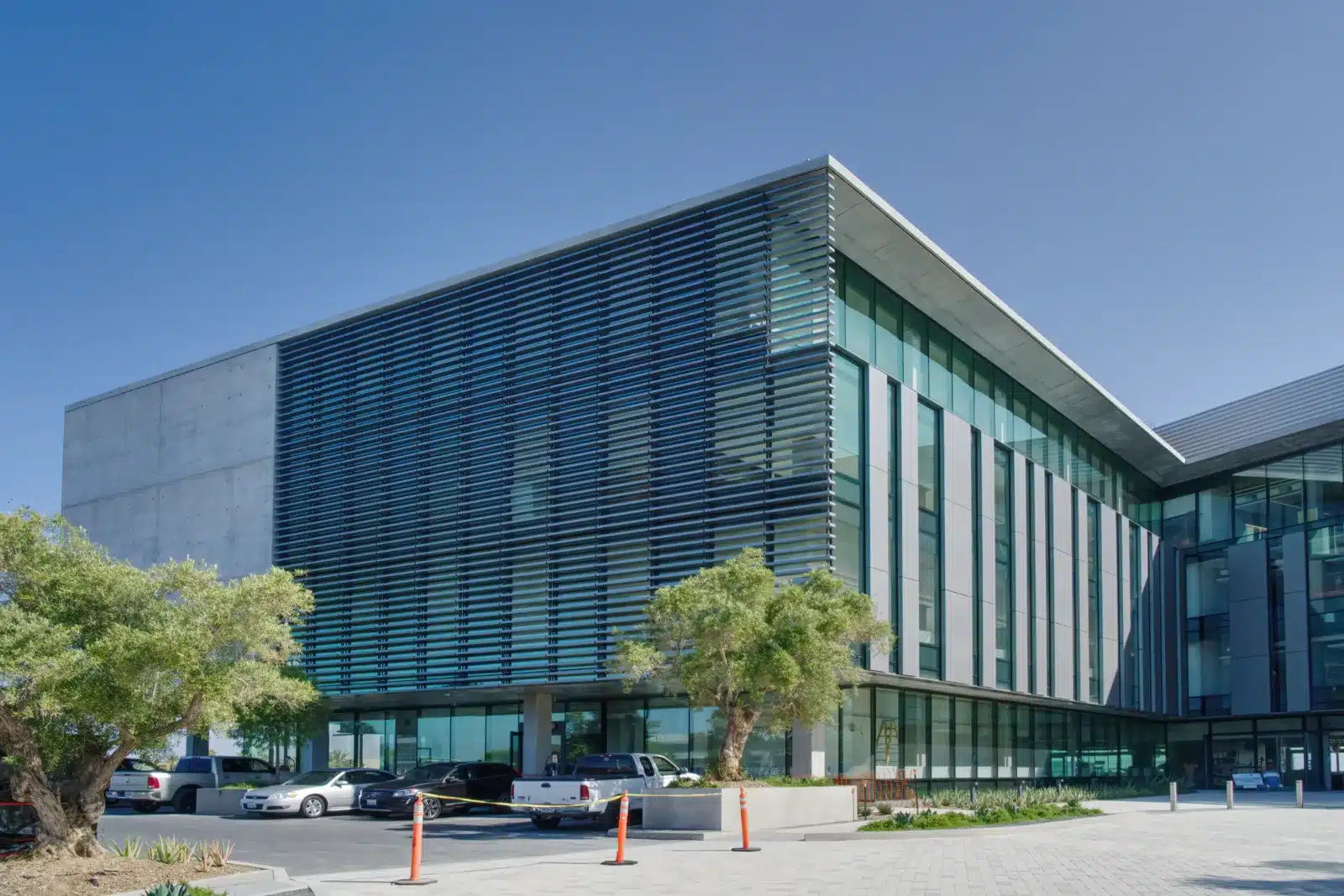
Façades that absorb solar heat can raise indoor temperatures and increase cooling loads. Light-colored, high-performance metal cladding exterior can help manage the effects of solar heat by:
- Reflecting more solar energy away from the façade
- Reducing heat absorbed by exterior surfaces
- Blocking direct sunlight with exterior shading
With Americlad’s customizable metal finishes and shading and sun control systems, architects can manage solar exposure while achieving the desired exterior design.
How Does Americlad’s Metal Cladding Exterior Improve Long-Term Building Performance?
Better control over heat transfer and solar gain reduces the amount of heating and cooling required to maintain comfortable interior conditions. Lower demand can reduce HVAC workloads and contribute to more efficient building operation over time. Additionally, metal cladding exterior requires relatively little maintenance. Its long service life can reduce the need for replacement materials, while the recyclability of metal supports broader sustainability goals.
Americlad offers custom fabrication capabilities, so architects and contractors can select cladding components suited to each project’s dimensions and design requirements. This project-specific approach helps create a coordinated façade that delivers reliable performance throughout the building’s service life.
Design a High-Performance Building Exterior With Americlad
A high-performance metal cladding exterior gives architects and contractors an opportunity to address multiple aspects of building performance through one coordinated façade strategy.
Americlad brings architectural metal solutions and custom fabrication capabilities together to help project teams meet these interconnected requirements. From wall panels to sun control systems, architects and contractors can customize solutions that align with the building’s design and performance goals.
Explore Americlad’s metal wall panel systems to find the right approach for a high-performance commercial exterior.
Frequently Asked Questions
How does a metal cladding exterior improve thermal efficiency?
A metal cladding exterior can improve thermal efficiency when integrated with continuous insulation and effective air and moisture control. Together, these elements help limit heat transfer through the wall assembly for more consistent envelope performance.
How can thermal bridging be reduced in metal cladding systems?
Thermal bridging can be reduced by using continuous insulation, thermal breaks, and attachment methods that limit direct conductive paths between the exterior cladding and building structure. These strategies help reduce the amount of heat that can bypass the insulation layer.
Can metal cladding help reduce cooling demands in commercial buildings?
Yes. Metal cladding with finishes that reflect more solar energy can reduce heat absorption at the façade. Combined with exterior shading, the assembly can limit solar heat gain and reduce HVAC cooling demand.