Fire-resistant cladding is one component of exterior wall assembly. Its performance must be considered alongside applicable codes, materials, insulation, barriers, attachments, and assembly configuration. Selecting the correct metal cladding therefore requires more than simply choosing a fire-resistant material.
With decades of experience in metal cladding and fabrication, Americlad has deep knowledge of the nuances of fire-resistant cladding. This article examines NFPA requirements, façade testing standards, and material selection considerations to help architects make informed decisions.
What NFPA Requirements Apply to Metal Cladding?
NFPA requirements operate within the broader building-code framework. Architects must determine which provisions apply to the specific exterior wall construction rather than treating “fire resistant” as a universal product designation. NFPA 285 is particularly important because it evaluates the vertical and lateral fire propagation characteristics of exterior wall assemblies containing combustible components. Compliance applies to the tested assembly, not only the exterior cladding material.
The fire characteristics of a metal panel alone do not establish the performance of an exterior wall system. Insulation, air and water barriers, attachments, cavities, substrates, and other components can affect assembly performance. Establishing fire-performance requirements early allows architects to incorporate them into material selection, specifications, and system design before costly changes become necessary.
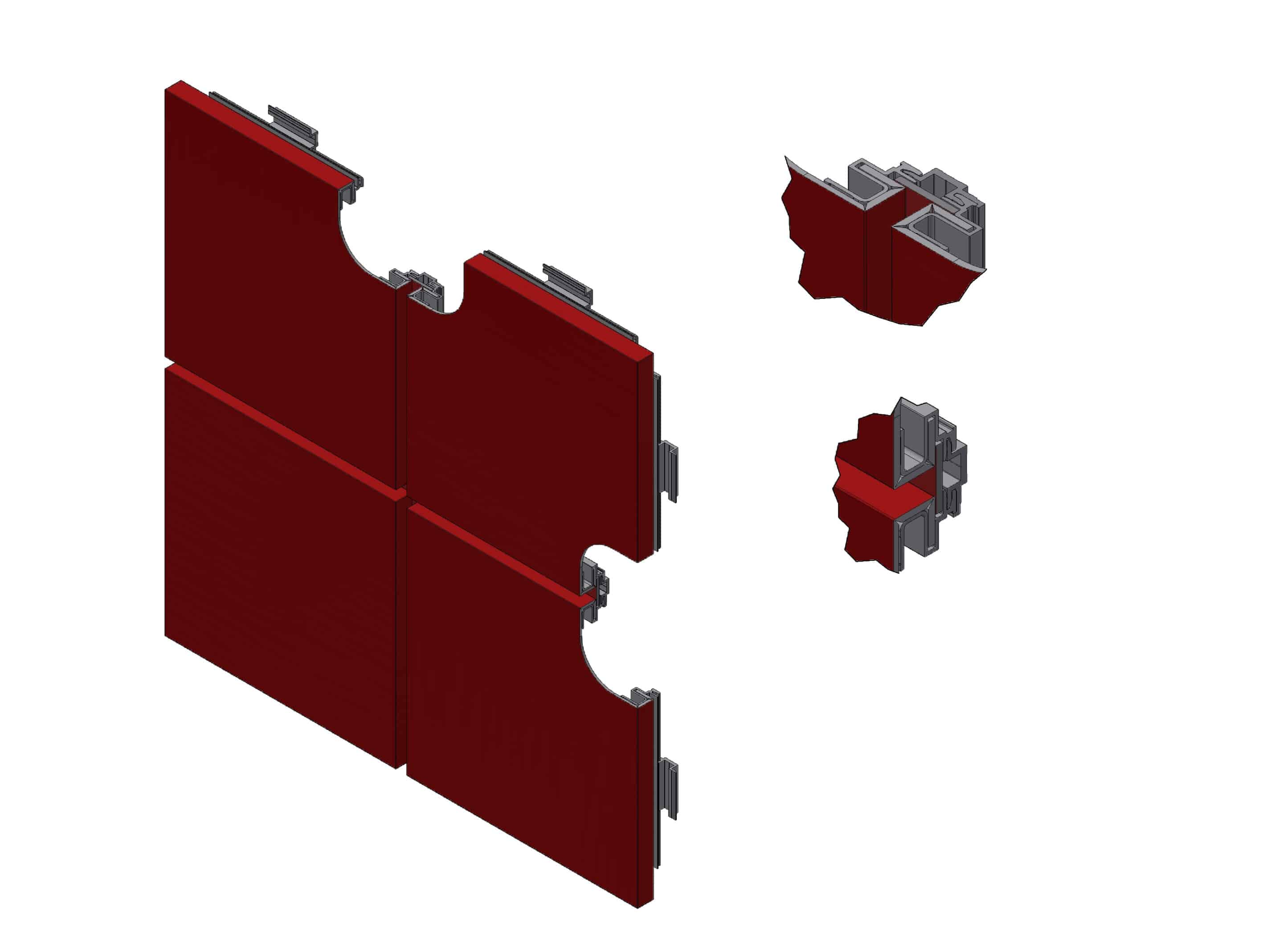
When looking for fire-resistant metal cladding, architects should choose an option that comes with documented NFPA 285 testing. The Americlad® AC-1200 and AC-1200 PE systems are both suitable for projects that need a fire-resistant rainscreen panel system.
Which Building Codes and Testing Standards Apply to Fire-Resistant Cladding?
Fire-resistant cladding requirements depend on the building codes defined by a project’s jurisdiction. In the U.S., the International Building Code (IBC) provides requirements for exterior wall assemblies, fire and smoke prevention, and provisions for metal composite materials (MCM). The applicable requirements depend on factors such as construction type, building height, wall materials, and the presence of combustible components.
For metal façade systems, architects should also understand NFPA 285 as well as the ASTM and AAMA standards applicable to the project.
- NFPA 285 evaluates flame propagation characteristics of exterior wall assemblies containing combustible components
- ASTM and AAMA testing can address separate performance requirements such as structural loading, air infiltration, and water penetration. These tests are not interchangeable.
The Americlad® AC-1200 Composite Dry Joint Panel System is NFPA-tested and approved and outperforms other systems in AAMA 509 and ASTM testing. Architects needing a fire-resistant rainscreen panel system can rely on this option for projects with strict building requirements.
How Should Architects Select Fire-Resistant Cladding?
Architects should begin by evaluating fire-resistant cladding systems against applicable building codes and assembly compliance standards. Fire safety, however, is only one part of façade selection. Architects must also account for structural performance, moisture management, durability, attachment strategy, constructability, and aesthetic intent.
Working with an experienced cladding fabricator early can help coordinate these requirements, particularly for custom designs or complex performance criteria.
Americlad offers plate, composite, modular, corrugated, flush, flatlock, insulated glaze-in, and other architectural metal wall panel systems. With multiple material and finish options, architects can evaluate fire-resistant solutions against project-specific performance requirements while maintaining design flexibility.
Find the Right Metal Cladding System for Your Next Project
Selecting fire-resistant cladding requires a system-level approach. Architects must consider applicable building codes and NFPA requirements, testing standards, material composition, and the performance of the complete exterior wall assembly. Addressing these factors early makes it easier to coordinate fire safety with structural performance, moisture management, constructability, durability, and design intent.
Americlad is here to support architects and contractors with an extensive selection of metal cladding systems, materials, configurations, and finishes. Explore our collection of fire-resistant metal wall panel systems to build your next project with confidence.