
A building’s environmental impact begins long before construction is complete. Every material choice influences embodied carbon, structural demands, and the resources required to bring a design to life. Selecting the right metal cladding for commercial buildings creates opportunities to improve sustainability from manufacturing through installation.
With Americlad’s metal cladding and fabrication capabilities, including lightweight composite panels and precision fabrication, project teams can minimize material waste and on-site modifications. Keep reading to learn more about resource-efficient construction that maintains architectural integrity and design flexibility.
Table of Contents
How Does Material Selection Influence Environmental Impact?
When it comes to metal cladding for commercial buildings, material extraction, processing, and fabrication all contribute to embodied carbon. Therefore, the amount of material used and the energy required to produce it affect a building’s environmental footprint.
Compared to solid metal panels, composite metal panels use materials more efficiently because they use thin metal face sheets around a strong core. However, the overall environmental impact depends on the core material, recycled content, and manufacturing process.
Americlad’s composite panel systems give project teams the flexibility to achieve architectural design goals while reducing reliance on solid metal. Evaluating these systems through material quantities and product-specific environmental data can reveal opportunities to lower embodied carbon and reduce demands on supporting structures.

Can Lightweight Metal Cladding Reduce Structural Demands?
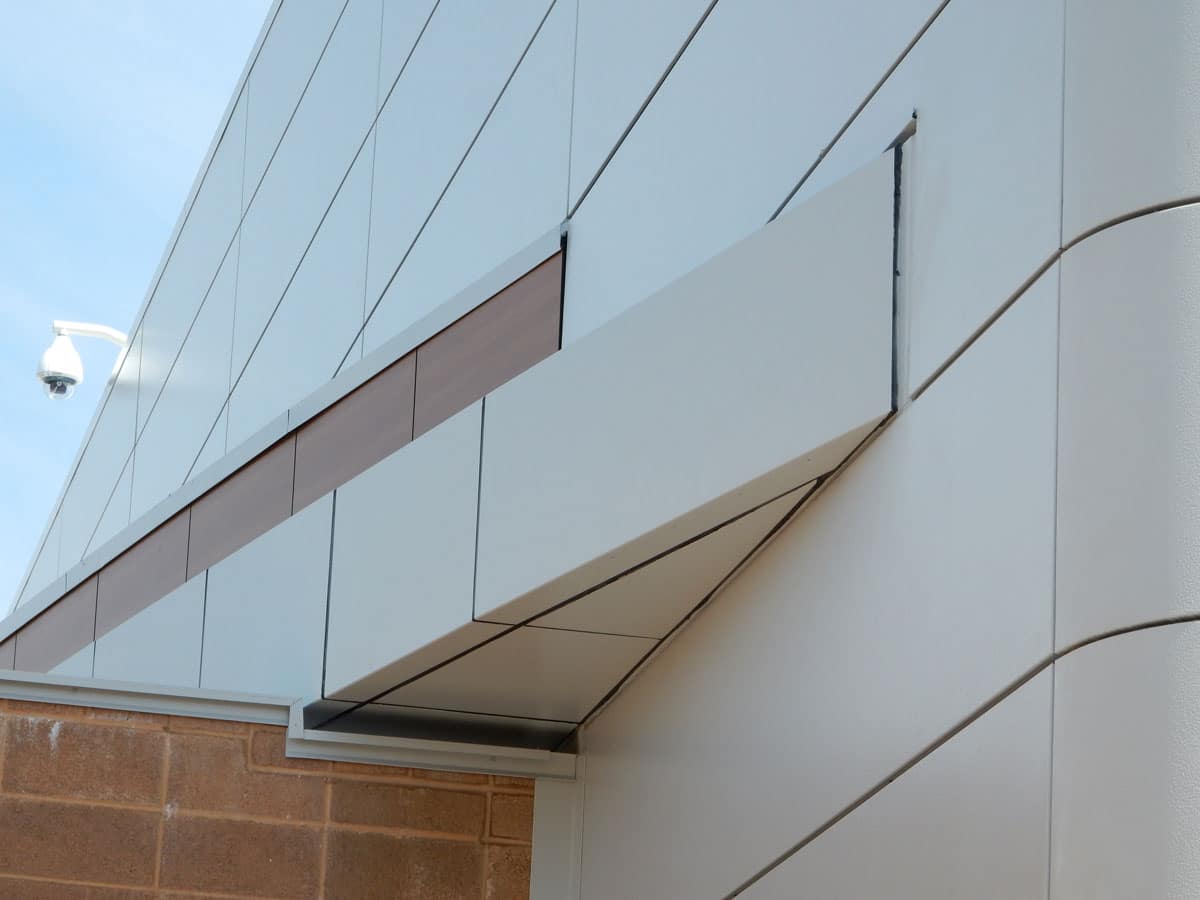
Lightweight metal cladding for commercial buildings, like Americlad’s metal wall panel systems, can improve material efficiency beyond the façade itself. Composite metal panels weigh less per square foot than many solid metal and masonry alternatives. They can be transported more efficiently and reduce the dead loads imposed on the building.
Reduced façade loads may also create opportunities to optimize structural design. Depending on project requirements, engineers may be able to reduce the size or quantity of secondary framing and connections. On some projects, lower loads may also influence primary structural components, reducing material consumption and associated embodied carbon.
Will Precision Fabrication Minimize Material Waste During Construction?
Precision fabrication creates additional opportunities to reduce material waste during construction. Composite metal cladding for commercial buildings can be manufactured to project-specific dimensions and configurations, allowing more of the fabrication work to be completed before materials reach the jobsite.
Dimensional accuracy and consistent panel quality are integral aspects of Americlad’s fabrication process. With prefabricated panels that meet specifications when they arrive onsite, contractors can improve installation efficiency and reduce material waste associated with field adjustments and rework.
Reduce The Environmental Impact Of Your Next Project with Americlad
Every façade decision presents an opportunity to improve a building’s environmental performance. By selecting lightweight composite panels fabricated with precision, project teams can reduce material use, embodied carbon, and construction waste.
Americlad’s metal cladding for commercial buildings and precision fabrication capabilities support design goals while using resources more efficiently. Explore metal wall panel systems that combine architectural performance, material efficiency, and sustainability.