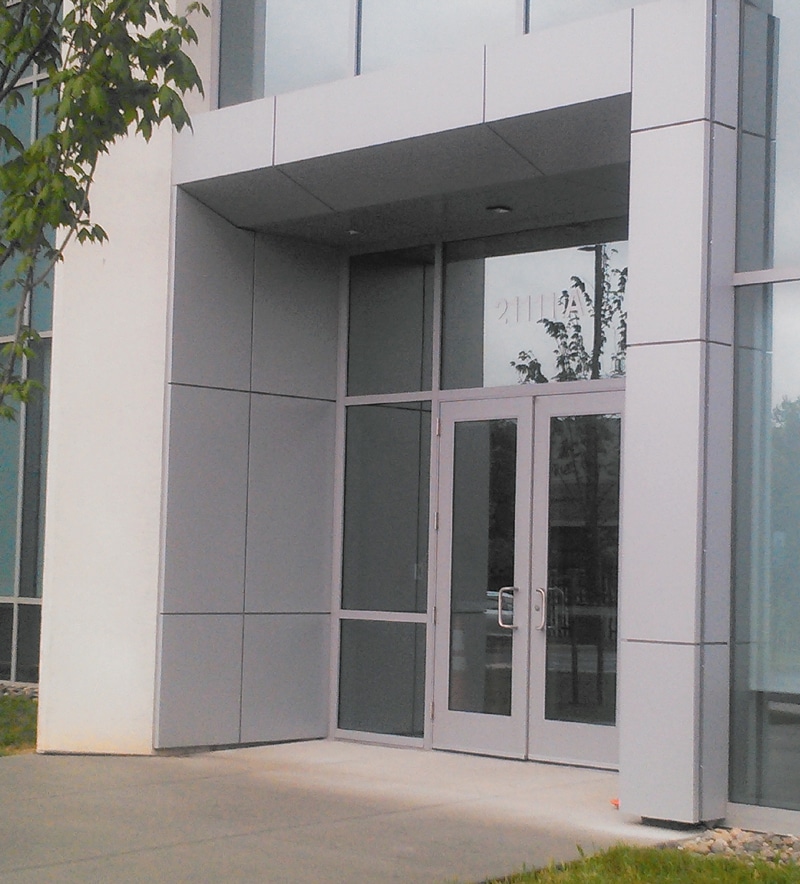
For teams who need a low maintenance exterior cladding that performs well and maintains its appearance, aluminum remains a strong choice.
Aluminum cladding exteriors have become a favorite among architects and contractors because they bring creative freedom and dependable performance together. Modern buildings often include bold shapes, detailed transitions, and tight schedules, which means teams need cladding that can adapt without creating extra work. A versatile system keeps the project moving, supports clean design, and delivers consistent results across the entire facade.
This article outlines how aluminum cladding exterior systems support these needs and how Americlad provides the engineering and fabrication quality required for real project conditions.
Table of Contents
- What Makes Aluminum Cladding Exterior Systems Inherently Versatile?
- How Does Aluminum Cladding Adapt to Varied Geometries and Complex Envelope Conditions?
- How Does Finish Variety and System Flexibility Strengthen Constructability?
- Explore Americlad’s Versatile Cladding Systems
- Frequently Asked Questions
What Makes Aluminum Cladding Exterior Systems Inherently Versatile?
Aluminum offers qualities that make it one of the most adaptable materials used in commercial construction. The versatility of an aluminum cladding exterior comes from a combination of material properties, system design options, fabrication capabilities, and real world performance benefits.
1. Lightweight material that supports efficient installation
Aluminum is significantly lighter than many other exterior cladding materials. This reduces structural load requirements and makes handling easier for installers. The lighter weight also supports faster installation and helps maintain schedule efficiency.
2. Strong formability for creative and functional designs
Aluminum can be formed into a wide range of panel shapes and sizes. This flexibility supports both simple layouts and complex architectural forms. Curves, angles, transitions, and unique proportions can all be achieved without compromising system integrity.
3. Compatibility with many wall assemblies
An aluminum cladding exterior integrates well with various substrates and structural conditions. This adaptability allows design teams to use the same material across different parts of the building while still meeting performance requirements for each assembly.
4. Project specific engineering for unique geometries
Many commercial buildings include detailed transitions or unique surfaces. Americlad can engineer panels in sizes and shapes that match the geometry of each project. This helps the cladding follow the intended design without forcing modifications during installation.
5. Reliable in house fabrication for consistent quality
Americlad fabricates panels in house using controlled production methods that maintain tight tolerances. This ensures that custom shapes and larger panel groupings align correctly during installation. Consistent fabrication quality reduces field adjustments and helps maintain the clean visual lines expected in commercial facades.
6. Smooth transitions across varied envelope conditions
Versatility extends beyond shape. A successful aluminum cladding exterior must maintain performance and appearance across corners, soffits, openings, and material interfaces. Americlad’s systems are developed to support smooth transitions, uniform detailing, and consistent alignment across these varied conditions.
7. Support for long term visual continuity
Because aluminum retains its shape and finish quality over time, it helps maintain visual continuity across large elevations. When paired with Americlad’s controlled finishing processes, the system delivers a consistent appearance even when different panel sizes or shapes are used together.
Americlad provides an extensive portfolio of metal wall panel systems. This includes plate wall panels, composite panels, flatlock panels, modular wall systems, honeycomb panels, and insulated wall panel systems. Having many system types available allows teams to specify the right configuration for each part of the building envelope while maintaining a unified material appearance.
How Does Aluminum Cladding Adapt to Varied Geometries and Complex Envelope Conditions?
Modern commercial buildings often include curved forms, angled planes, segmented surfaces, and detailed transitions. Aluminum is naturally suited for these conditions because it can be shaped to follow complex geometry without forcing changes to the design. This makes an aluminum cladding exterior a dependable option when architectural freedom and predictable field performance are both priorities.
Americlad supports this adaptability through custom engineered profiles, flexible system connections, and panel options that work with many types of substrates. These capabilities help maintain alignment, protect the continuity of air and water control systems, and reduce the amount of field correction that is often required during envelope installation.
- Aluminum can be formed to match curved surfaces, angled planes, segmented elevations, and many other unique shapes
- The material allows for project specific sizes, proportions, and configurations that support both creative and functional design needs
- Aluminum works with a wide range of attachment methods and structural substrates, which helps maintain consistent system performance
- Flexible attachment options support continuity of air and water control layers across transitions and changes in plane
- Panels are easier to maneuver and adjust during installation, which helps teams respond to real site conditions
- The stable nature of aluminum supports clean detailing and consistent alignment across varied facade conditions
How Does Finish Variety and System Flexibility Strengthen Constructability?
Finish variety allows an aluminum cladding exterior to meet different visual and performance needs without losing a consistent look. A wide range of colors, coatings, and surface effects helps the system match the design while keeping the facade uniform.
System flexibility also supports easier installation. Panels that work with different substrates and site conditions help teams maintain alignment and protect the building enclosure. This makes the system more predictable and more efficient to install.
Ways Finish Variety and System Flexibility Support Constructability:
- Multiple finish options support varied visual and performance needs
- Consistent finishes help maintain a unified appearance
- Durable coatings support long term visual quality
- Flexible connections help protect air and water control layers
- Panels that adjust easily on site support clean and accurate installation
Explore Americlad’s Versatile Cladding Systems
A well designed aluminum cladding exterior should look good, install smoothly, and hold up over time. Versatility makes that possible. When a system can adapt to different shapes, finishes, and field conditions, teams can move from design to installation with fewer complications and better results.
Americlad offers a wide selection of aluminum cladding systems that support this level of flexibility. Their focus on quality, precise fabrication, and reliable finishes gives project teams the tools they need to plan and build confidently. It is a simple way to bring strong design and dependable performance together.
See the full selection of systems and find the right fit for your project.